

Fear of Missing Out at Deutsche Rohstoff
| # | Name | Performance 7 days |
|---|---|---|
| 1 | 6,36% | |
| 2 | 7,30% | |
| 3 | 108,46% | |
| 4 | 8,59% | |
| 5 | 7,07% |
The share of rose by a further 8.6 percent in the past week. Since the beginning of the year, the gains add up to around 93 percent. The Mannheim-based company primarily produces oil and gas in the USA and also invests in strategic raw material projects. The stock recently benefited mainly from the rapid rise in oil prices, but also from the strong expansion of the oil producer in the US market. At the beginning of April, the management was therefore able to raise its financial and production planning. At the same time, more capital is to be returned to shareholders.
With the presentation of the consolidated financial statements for the past year, Deutsche Rohstoff confirmed the raised forecast last Thursday. In the base scenario, the management expects revenue of 260 million to 280 million euros and EBITDA of 290 million to 310 million euros, whereby the EBITDA includes a significant other operating income from the partial sale of the Almonty stake. In the more optimistic scenario, the target ranges are even 290 million to 310 million euros in revenue and 320 million to 340 million euros in EBITDA. Previously, a maximum of 200 million in revenue and EBITDA of 135 million euros had been expected. The company also provided a forecast for 2027 for the first time: 280 million to 300 million euros in revenue and 210 million to 230 million euros in EBITDA in the base scenario. The assumption for this is an oil price of 75 dollars per barrel WTI. Currently, we are at a price of around 97 dollars.
The strong jump in the forecast is linked to a significantly accelerated drilling program. Deutsche Rohstoff wants to invest the proceeds from the sale of Almonty shares in new drilling. The analysts at First Berlin estimate the expected sales proceeds from 9 million Almonty shares at around 106 million euros and the resulting profit for the seller at almost 100 million euros. In line with this, the dividend for the past financial year is to increase from 2.00 euros to 2.25 euros per share. In addition, the management decided on a new share buyback program of up to 7.5 million euros, which is to run until April 21, 2027 at the latest.
Analyst opinions were predominantly positive against this backdrop. mwb research confirmed the buy recommendation last week and raised the price target from 129.00 euros to 135.00 euros. This step was justified with the confirmed preliminary figures, the higher dividend, the new buyback program, the 2027 outlook and the greater operational flexibility due to strengthened liquidity. First Berlin also remained at Buy, but lowered the price target from 139.00 euros to 124.00 euros. The decisive factor there was that the valuation contribution of the remaining Almonty position was set lower after the sale, while the buy recommendation remained due to the continued perceived price potential.
Michael Kissig is also a big fan of the stock. In his wikifolio Kissigs Nebenwerte Champions, Deutsche Rohstoff (DRAG) is the second-largest position with a portfolio share of 13 percent. “So you can (almost) never have enough DRAG in your portfolio, that’s my impression,” wrote the trader after what he described as a “very informative web call” last week. With a view to the oil price, which is well above 75 dollars, the trader is already speculating that over the course of the year “one or two further upward adjustments” may be necessary. The focus of this model portfolio is on hidden champions, successful mid-sized companies, niche market leaders and sometimes also promising turnaround speculations. Since the summer of 2020, the trader has achieved a price increase of 86 percent (11.4 percent p.a.) with a maximum drawdown of around 34 percent.
Chart
Buying the Dip at TUI
| # | Name | Performance 7 days |
|---|---|---|
| 1 | -6,88% | |
| 2 | -6,25% | |
| 3 | -13,69% | |
| 4 | -5,15% | |
| 5 | -6,24% |
TUI lost 13.7 percent in the past week. This abruptly halted the recent upswing in the share. The group operates tour operators, its own airlines, hotels and cruise activities. The share was under pressure primarily because the consequences of the Iran war are visibly weighing on the previously expected recovery path for the current financial year. Immediately after the profit warning last Wednesday, the share fell significantly. TUI still expects an operational improvement compared to the previous year for the second financial quarter. Adjusted EBIT is expected to be 5 million to 25 million euros better on a currency-adjusted basis than in the same quarter of the previous year, in which a loss of 207 million euros was incurred. At the same time, the group quantified the burdens from repatriations and operational disruptions in March at around 40 million euros. Around 10,000 guests were repatriated, including around 5,000 passengers from the cruise ships Mein Schiff 4 and Mein Schiff 5.
However, the decisive factor for the price reaction was the lowered full-year outlook. For 2026, TUI now expects adjusted EBIT of only 1.1 billion to 1.4 billion euros, after previously forecasting an increase of 7 to 10 percent on the previous year’s figure of 1.413 billion euros. The revenue forecast was suspended; previously, the group had expected an increase of 2 to 4 percent. In Markets + Airline, booked summer revenues are currently 7 percent below the previous year, and hotel occupancy for the second half of the financial year is also down 7 percent. Customers are booking more short-term, and demand is partly shifting from the eastern to the western Mediterranean region. The two cruise ships were able to leave the Persian Gulf on April 19 and are expected to resume their regular Mediterranean cruises from mid-May.
Analysts reacted with lower price targets but remained mostly constructive. lowered the price target from 13.50 euros to 12.50 euros and confirmed “Overweight”. The adjustment was justified by the profit warning, a more difficult summer season and higher expectations for net debt. Research cut the price target from 12.00 euros to 10.50 euros but remained at “Buy”. The focus there was on declining summer bookings and the question of whether travel to the western Mediterranean can compensate for the weakness in Turkey, Cyprus and Egypt. Barclays had already previously lowered the price target from 11.00 euros to 10.50 euros and confirmed “Overweight”; higher kerosene costs, possible capacity cuts and uncertainty due to Iran, Ukraine and fuel were cited as burdens. The analysts’ consensus price target also leaves plenty of upside for the share. According to aktien.guide, at 11.48 euros it is almost 80 percent above the current price level.
TRADING-SENTIMENT
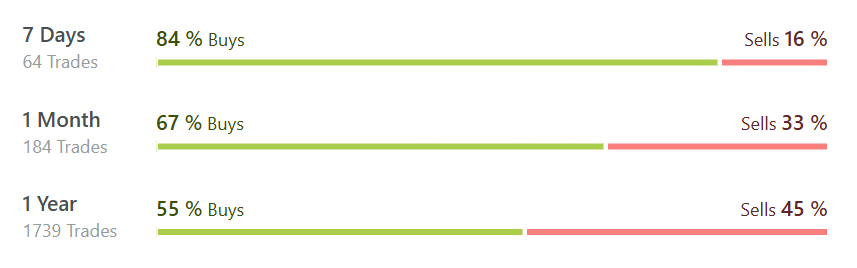
Many wikifolio traders therefore used the setback as an opportunity to enter the stock. A look at the trading sentiment shows a very clear buyer surplus at Planet Labs. David Hoch entered newly via his wikifolio Aktienauswahl nach Strategie last Tuesday and gave the share a weighting of 2.2 percent. The trader applies a quantitative strategy for stocks from Europe and the USA in which the price-earnings ratio, the equity ratio, earnings growth, the margin and the performance after approx. 6 months as well as after approx. 12 months of the share play a role. As his goal, he states that he wants above all to outperform the major stock indices (DAX, MDAX, SDAX, TecDAX, Euro Stoxx 50 and Dow Jones). So far this has worked well. Since autumn 2015, the price of the wikifolio has risen by 171 percent. The DAX achieved 123 percent in this period, the SDAX 95 percent, the Euro Stoxx 50 73 percent and the MDAX 43 percent.
Many wikifolio traders have also used the renewed price losses to build or increase positions in the stock. A look at the current trading sentiment for TUI shows a very clear surplus of buyers. Manuel Stötzel increased his TUI position in the wikifolio Empfehlungen aus Zeitschriften on Thursday to now 4.3 percent. The trader is currently sitting on a book loss of a good 9 percent. Overall, however, the wikifolio still achieves a value increase of 281 percent (12 percent p.a.) since mid-2014. The long-term oriented portfolio, which is close to its all-time high, contains stocks “from the recommendation spectrum of German business and stock market magazines”.
Chart
Taking Profits at Aixtron
| # | Name | Performance 7 days |
|---|---|---|
| 1 | 8,38% | |
| 2 | 6,68% | |
| 3 | 9,06% | |
| 4 | 6,49% | |
| 5 | 5,54% |
The MDAX-listed share of gained 5.5 percent in the past week. This continues the impressive rally of the equipment manufacturer. Since the turn of the year, the price has risen by an astonishing 165 percent. The Rhineland-based company supplies deposition systems for the semiconductor industry, especially for compound semiconductors. These are used, among other things, in laser, LED, data transmission, power and optoelectronic applications. The latest driver of the share price was a significantly better order situation in optoelectronics, triggered by sustained strong demand in the field of AI data centers.
Immediately after the preliminary Q1 figures and the increase in the previous annual forecast almost two weeks ago, the share had jumped significantly again. Order intake rose by around 30 percent in the first quarter to about 171 million euros. More than 65 percent of equipment order intake came from optoelectronics. Revenue, at around 59 million euros, was significantly lower than the 112.5 million euros in the previous year, but was within the company’s own target range. A one-off expense in the mid-single-digit million range for a personnel measure and the negative operating leverage due to the low revenue volume had a negative impact. Preliminary EBIT was therefore minus 22 million euros, after plus 3.3 million euros in the same quarter of the previous year. For the share price, however, the positive outlook was decisive. Aixtron increased its revenue forecast for 2026 from around 520 million euros plus/minus 30 million euros to around 560 million euros plus/minus 30 million euros. The expected EBIT margin was raised from 16 to 19 percent to 17 to 20 percent, and the gross margin is now expected to be around 42 percent.
Analysts assessed the news differently. Barclays confirmed “Overweight” with a price target of 33.00 euros, which is, however, significantly below the current price level. The strong optoelectronics business supports the ambitions of the chip equipment supplier; at the same time, profitability in the first quarter was weaker than expected, while cash conversion was highlighted positively. UBS left Aixtron at “Neutral” with an unchanged price target of 28.00 euros. The ongoing momentum in optoelectronics was acknowledged there, but risks in the area of power management chips and the strong price increase were also pointed out. mwb research raised the price target from 30.00 euros to 33.00 euros but remained at “Sell”. This was justified by ongoing open questions regarding the recovery in silicon carbide, the timing of AI gallium nitride orders and a now demanding valuation. This is also seen as a problem by other banks, as the consensus price target shows. According to aktien.guide, it is only 32.64 euros and thus quite clearly below the Aixtron share price of around 46 euros.
TRADING-SENTIMENT
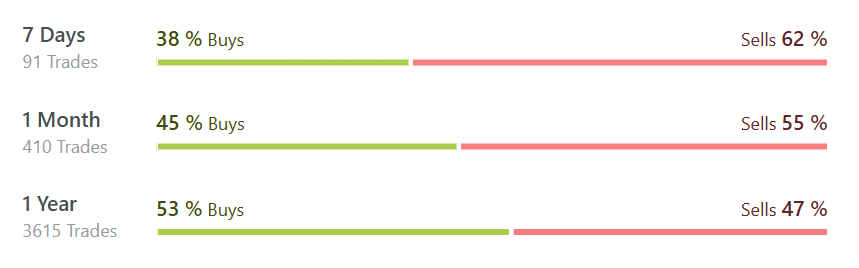
Against this backdrop, some wikifolio traders have recently also decided to take profits. Hans-Jürgen Thees sold at least part of his Aixtron shares on Wednesday, achieving a profit of 245 percent for his wikifolio COVACORO, which is at a record high. Nevertheless, the stock remains the number one position at 9.5 percent in the portfolio, which consists of 18 values. This consists of shares whose selection is primarily based on the examination of fundamental key figures and which are to be held as long as possible. The trader states the goal of achieving a double-digit return per annum over several years. After more than seven years, this has worked well with an average annual performance of 12.4 percent. In total, the wikifolio has thus gained 131 percent in value since March 2019.
Chart
Jumping the Ship at flatexDEGIRO
| # | Name | Performance 7 days |
|---|---|---|
| 1 | -20,64% | |
| 2 | -5,56% | |
| 3 | -5,31% | |
| 4 | -13,01% | |
| 5 | -10,59% |
The share of plunged by 20.6 percent last week. The online broker offers private investors in Europe securities trading, savings plans and increasingly also other investment products such as crypto trading. The figures for the first quarter were operationally strong, but this was not the decisive factor in the market. Revenue rose by 19 percent to 174 million euros, net profit by 28 percent to 54 million euros. This was the first time quarterly profit exceeded 50 million euros. Commission income increased by 18 percent to 116 million euros, and interest income rose by 14 percent to more than 49 million euros despite a lower interest rate environment. The number of processed transactions increased by 17 percent to 22.7 million. This indicates high trading activity among existing customers in a volatile market environment. The number of customers rose to 3.58 million at the end of the quarter, after 3.47 million at the end of 2025 and 3.20 million a year earlier. Around 123,000 new customer accounts were added in the first quarter, compared to around 139,100 in the same quarter of the previous year. This corresponds to a decline of 11.6 percent.
However, something else was probably decisive for the price slump. Expectations may have been too high in advance. In a conference call with journalists, the management warned against extrapolating the growth rates of the first three months to the full year. Therefore, the annual forecast was “only” confirmed and not raised: In 2026, revenue is expected to increase by 5 to 10 percent to 588 million to 616 million euros, and net profit by 5 to 15 percent to 168 million to 184 million euros. The analyst reactions show exactly this ambivalence. UBS lowered the price target from 45.50 euros to 43.00 euros but left the rating at Buy. The quarter had been good; the negative price reaction was justified by concerns about slowing momentum in customer growth and lower earnings estimates. Jefferies confirmed the “Hold” rating with a price target of 32.00 euros. The first quarter had followed on from the fourth quarter: High geopolitically driven market volatility and higher interest income had enabled a strong quarter. had raised the price target from 45.00 euros to 47.00 euros before the figures and confirmed “Buy”, supported by adjusted assumptions for European online banks in the current interest rate environment. On average, banks estimate the fair value of the share at 41.82 euros according to aktien.guide, while it currently costs just over 30 euros.
Nevertheless, some wikifolio traders are cautious. Lars Gappenberger removed the share from his wikifolio Value Box on Thursday after a short holding period with a small loss of 4.1 percent. On the one hand, the trader pays attention to key figures of classic trend strategies such as RSL and momentum metrics. On the other hand, within the framework of fundamental valuation, he keeps an eye on debt and cash flow or the relationship between them. The portfolio, which is just below its record level, has achieved a performance of 266 percent since mid-2020. This corresponds to an average annual increase in value of more than 25 percent with a maximum loss of less than 18 percent.
Chart
Disclaimer: Every investment in securities and other forms of investment is subject to various risks. Explicit reference is made to the risk factors in the prospectus documents of Lang & Schwarz Aktiengesellschaft (Final Terms, Base Prospectus together with supplements and the Simplified Prospectuses, respectively) at wikifolio.com , ls-tc.de and ls-d.ch. You should read the prospectus before making any investment decision in order to fully understand the potential risks and rewards of the decision to invest in the securities. The approval of the prospectus by the competent authority should not be construed as an endorsement of the securities offered or admitted to trading on a regulated market. The performance of the wikifolios as well as the respective wikifolio certificates refers to past performance. Future performance cannot be inferred from this. The content of this site does not constitute investment advice or a solicitation to buy or sell securities. This applies in particular to countries in which such an offer to buy or sell is not permitted. For further information, please refer to our General Terms and Conditions.


