

Fear of Missing Out at Siltronic
| # | Name | Performance 7 days |
|---|---|---|
| 1 | 12,52% | |
| 2 | 8,56% | |
| 3 | 42,44% | |
| 4 | 15,87% | |
| 5 | 10,26% |
The share, listed in the small-cap index SDAX, gained 12.5 percent in the past week. However, that was not what it looked like at the beginning of the week. On Tuesday, there was initially a stronger setback after the major shareholder placed 2.1 million Siltronic shares at 89.35 euros per share, thereby reducing its stake from around 31 percent to below 24 percent. However, this only weighed on the share price temporarily. At the end of the week, very positive signals once again came from Japan. The share of competitor Sumco jumped around 19 percent in Tokyo after Nomura assessed the prospects for silicon wafers much more positively. The analysts referred to the AI boom and the risk of new wafer shortages. This also affects Siltronic because the Munich-based company supplies high-purity silicon wafers for the semiconductor industry. These wafers are the raw material for logic and memory chips. Demand for modern 300-millimeter wafers in particular is increasingly linked to AI servers, HBM memory and high-performance processors.
TRADING-SENTIMENT
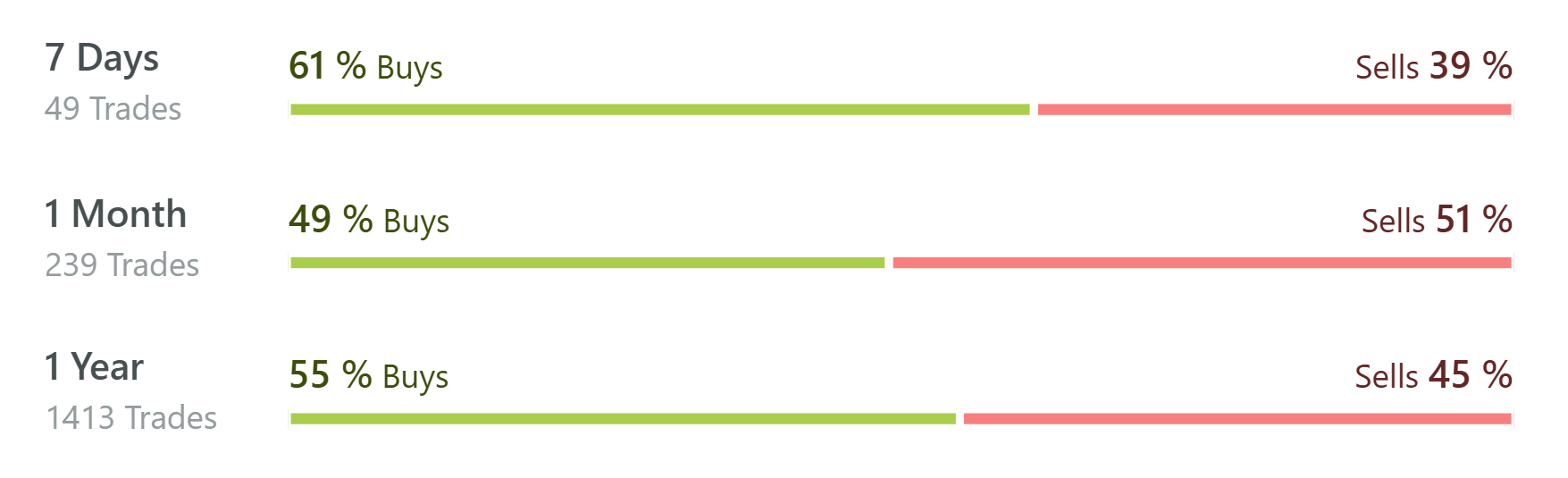
The wikifolio traders are becoming increasingly optimistic despite the rally. The current trading sentiment shows a clear buying surplus over the past seven days. Florian Schneider significantly increased his holding of Siltronic shares in the wikifolio Trendfolge nach Levy last Monday. With a portfolio weighting of around 11 percent, the share is currently the third-largest position among a total of ten holdings in the portfolio. “Siltronic – 100 euros, for the first time since 2022,” wrote the trader at the end of the week and reported on the new price impulse from Japan. However, the background to the strong price development is relatively irrelevant to him because he trades a rule-based momentum strategy. “Siltronic keeps its place in the RSL ranking. The trend template is intact. Whether the momentum will fully unfold in 2027 and 2028 as expected by analysts cannot be predicted — the rulebook remains decisive, not the price targets of others.”
Chart
The trader buys stocks with the highest relative strength according to Levy over a period of 65 days if they are in a superperformance phase defined by Mark Minervini and exhibit low market correlation and high trend stability. Portfolio holdings are sold whenever they are no longer among the top 10 or no longer meet the Minervini criteria. This approach has generated a performance of 343 percent or almost 15 percent per year on average since September 2015. Despite a three-year dry spell with steadily falling prices until the beginning of 2024, the maximum loss over more than ten years was limited to 27 percent. The wikifolio is currently trading at an all-time high.
Buying the Dip at Ambarella
| # | Name | Performance 7 days |
|---|---|---|
| 1 | -17,70% | |
| 2 | -9,37% | |
| 3 | -7,59% | |
| 4 | -13,63% | |
| 5 | -7,19% |
The share price of the American company collapsed by almost 18 percent in the past week. Up until Thursday evening, the stock was still in positive territory. Then the first-quarter results were released, triggering a wave of selling. On Friday, the stock lost more than 21 percent, although the company slightly exceeded official expectations. Revenue rose by 16.9 percent to 100.4 million dollars. For the second quarter, Ambarella forecast revenue of 105 million to 111 million dollars. The midpoint of the range was also slightly above market expectations. However, adjusted gross margin declined from 62.0 percent to 59.9 percent; for the second quarter, management is targeting 59.0 to 60.5 percent.
The chip developer builds low-power system-on-chip solutions for edge AI applications. The technology is used in camera systems, driver assistance systems, surveillance technology, drones and industrial image processing, among other things. Shortly before the earnings release, Ambarella announced an expanded partnership with Hanwha Vision that is expected to have revenue potential of more than 800 million dollars over a period of more than ten years. During the analyst call, management clarified that these are genuinely potential revenues and not already guaranteed sales. In addition, some analysts are concerned about the strong inventory build-up given the cyclical nature of the market. The resulting negative free cash flow is also viewed critically in some quarters. Following the call, the analysts at Summit Insights changed their rating from Buy to Hold and justified the downgrade with increased risks in the second half of 2026. The current consensus price target is around 92 dollars. That is slightly more than the stock was worth before the collapse.
TRADING-SENTIMENT
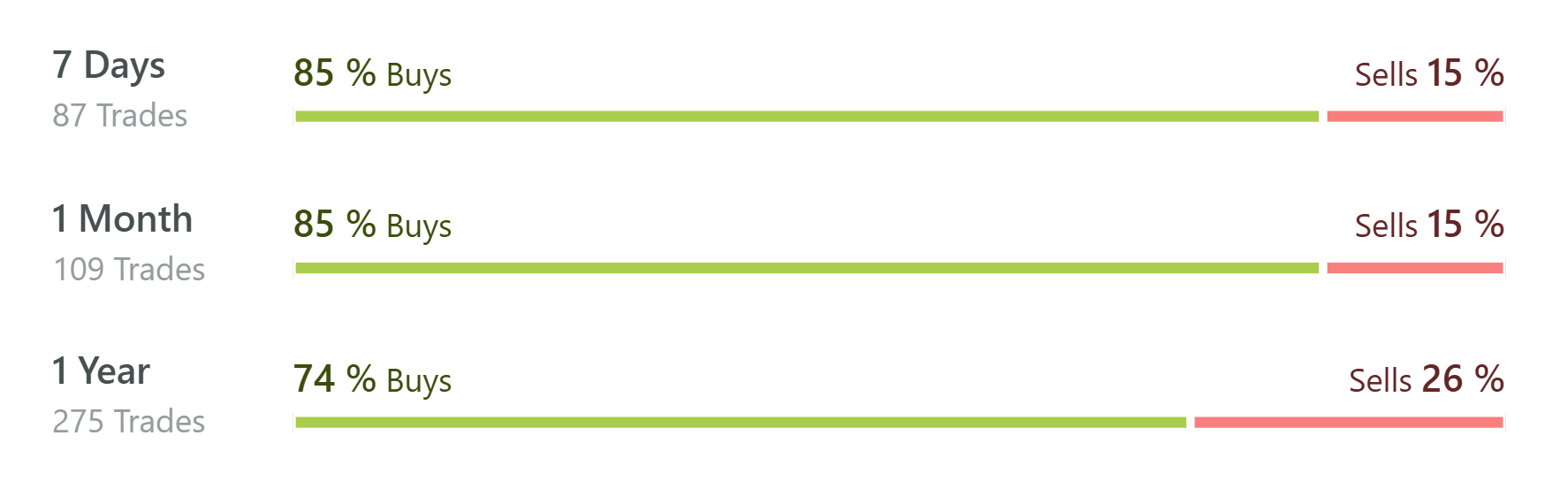
After the share price had almost doubled since the end of March, the good results, the “only” confirmed annual outlook and a new share buyback program of up to 50 million dollars were ultimately not enough to successfully defend the elevated level. However, many wikifolio traders used the price slump on Friday as an opportunity to buy the stock. A look at trading sentiment shows a clear buyer surplus for Ambarella. One example is Florian Riediger, who bought the stock for his wikifolio TSI Strategie Nasdaq-Werte. The model portfolio, which is trading at an all-time high, has increased in value by more than 30 percent per year on average since the beginning of 2017. Overall, this results in a performance of 1,160 percent with a maximum drawdown of 47 percent.
Chart
The trader considers the negative reaction in Ambarella to be exaggerated and therefore significantly increased the already existing position in two tranches at the end of the week. The stock is one of 16 holdings in the portfolio, where securities are selected according to technical strength and fundamental analysis. The focus is primarily on American technology stocks from the small- and mid-cap segment that are successfully positioned in their market niche and therefore, in the trader’s view, offer a long-term growth perspective. Riediger views the Hanwha deal, one of the largest contracts in the company’s history, particularly positively.
The decisive point from his perspective: “It’s not just about selling chips, but about joint development (co-development). Hanwha is integrating Ambarella’s edge AI technology across its robotics, industrial automation, physical security and life sciences divisions.” In the current transition to Physical AI, Ambarella is ideally positioned with regard to the computing power required directly in the device. The company is therefore transforming itself from a camera-chip provider into a platform supplier for the next generation of robots. With Ambarella, the trader is making a “pick-and-shovel” investment in the Physical AI and robotics boom. “We are not investing in an individual robot manufacturer, but in the supplier of the key technology."
Taking Profits at Microsoft
| # | Name | Performance 7 days |
|---|---|---|
| 1 | 12,27% | |
| 2 | 17,24% | |
| 3 | 5,45% | |
| 4 | 15,37% | |
| 5 | 6,39% |
gained 6.4 percent in the past week. However, the real boost only came at the end of the week when the stock rose by more than nine percent within two days. The company benefited from renewed broader interest in AI and software stocks after seemingly participating in the previous rally only with the handbrake on. Despite the ongoing recovery and a share price increase of 26 percent over the past two months, Microsoft is currently trading at around 450 dollars, still well below its all-time high of more than 555 dollars. Many other technology stocks have long since reached and exceeded their previous record levels. On a year-to-date basis, Microsoft is even in negative territory.
Microsoft is now fighting against this relative weakness and is stepping up its AI efforts. For the upcoming Build Conference in San Fran Cisco, the company is preparing a range of proprietary AI models. According to market reports, these include a model for programming tasks in GitHub Copilot as well as models for transcription, speech processing, image analysis and logical reasoning. This could become relevant for the stock because Microsoft has so far positioned its AI products largely through OpenAI. Proprietary models could reduce dependence, lower computing costs and integrate individual applications more cheaply into Office, GitHub and Azure.
In addition, the company received a major public-sector contract last week. The U.S. Department of Defense awarded a five-year contract worth 9.69 billion dollars for the consolidation of software licenses, cloud subscriptions and other Microsoft products. The contract does not represent entirely new spending but is intended to bundle existing budgets more efficiently. For Microsoft, however, it underscores the company’s position in business with large enterprise customers and government agencies. This recurring, highly scalable business differentiates the company from many smaller AI stocks whose market valuation depends more heavily on individual product announcements. On the other hand, many market participants continue to discuss the high AI investments, their impact on profit margins and the actual contribution of the new Copilot products.
Sentiment among wikifolio traders is also mixed. There have been some profit-taking transactions in recent days. Natalie Görzen sold some Microsoft shares from her wikifolio Balance Invest as early as Tuesday and realized a gain of 88 percent. With a portfolio weighting of around three percent, Microsoft still remains in the top five among the portfolio’s total of 60 stocks. In addition, there are 35 ETFs and five (very moderately weighted) leveraged products. Görzen consciously pays attention to a balanced allocation in the portfolio, which consists of stocks with good growth prospects and the most positive long-term chart pattern possible. The companies are also analyzed based on fundamental data. After a gain in value of 407 percent (23 percent p.a.), the wikifolio is currently trading at an all-time high.
Chart
Christian Tausch completely removed Microsoft shares from his wikifolio Marylin and recorded a price gain of between 10 and 11 percent. The goal is to identify “great, undervalued growth companies” using decisions that are 100 percent AI-driven. The selection is based on qualitative and quantitative company information as well as relevant market information. With a monthly update of the composition, the wikifolio is intended to serve as a “public track record to transparently demonstrate how AI-based allocation logic is implemented in practice.” The fully invested portfolio, currently consisting of twelve stocks, was launched at the end of 2024. Since then, the price has risen by 41 percent, while the maximum drawdown was 31 percent.
Chart
Jumping the Ship at Bayer
| # | Name | Performance 7 days |
|---|---|---|
| 1 | -5,53% | |
| 2 | -5,00% | |
| 3 | -5,10% | |
| 4 | -6,33% | |
| 5 | -7,75% |
shares lost 5.1 percent in the past week, pushing the year-to-date performance back into negative territory. After the strong previous year (plus 92 percent) and a promising start to the year, the stock has been consolidating since mid-February. The latest decline was once again mainly related to legal risks surrounding Monsanto, glyphosate and seeds. In Brazil, public prosecutors are seeking a ban on glyphosate. The lawsuit is directed against the responsible authority and government agencies, not directly against Bayer. Nevertheless, the issue is relevant for the share price because glyphosate is a central component of the agricultural business and Brazil is one of the world’s most important agricultural markets.
At the same time, a new lawsuit emerged in the United States. A seed company from Iowa accuses Bayer of unlawfully monopolizing the market for genetically modified corn seed in the USA. At the core of the case is the NK603 technology for glyphosate-tolerant corn after a patent expired in 2022. The plaintiff is seeking damages; in the United States, successful antitrust cases can result in damages being tripled. Bayer rejects the allegations and points to fair competition.
Operationally, the first-quarter figures did not provide any new negative factors. Group revenue increased by 4.1 percent to 13.4 billion euros on a currency- and portfolio-adjusted basis. EBITDA before special items improved by 9.0 percent to 4.45 billion euros. Management confirmed the currency-adjusted annual forecast. Analysts draw a very clear distinction between operational performance and legal risks. Jefferies increased the price target from 25.00 euros to 40.00 euros but maintained the rating at “Hold.” The analysts point to a sum-of-the-parts value for the group of 45 euros but continue to view litigation risks as the central discount factor. As a result, fair value could also fall to as low as 30 euros. Without clear progress in legal proceedings and without stronger pipeline momentum in the pharmaceutical business, Bayer remains difficult for many investors and analysts to assess. Current price targets range between 25.25 euros and 63.00 euros. On average, however, research firms still see considerable upside with a target price of 51 euros.
For many wikifolio traders, that is not enough. Josef Reinthaler took profits of 24 percent via his wikifolio GRANiT – Zeitdiamant on Thursday and sold his Bayer shares completely. Stocks in his portfolio generally tend to have a higher beta. Reinthaler, who relies on technical and fundamental analysis, describes himself in this wikifolio primarily as a discretionary trader with a focus on many years of experience and “gut feeling.” This has earned him a performance of 562 percent (15 percent p.a.) over more than 13 years. However, the wikifolio has only been investable as a certificate for a little over one year.
Chart
The certificate on the wikifolio Hi5 Trend Selection was issued just four months later, although Kevin Tarantino only launched it in June 2025. This trader bought Bayer shares during the past week. “Today Bayer was added to the Hi5 wikifolio,” he wrote, describing the pharmaceutical group as “one of the hottest turnaround bets in the DAX.” He was referring primarily to the Supreme Court decision expected this summer regarding the key glyphosate case. “A ruling in Bayer’s favor would trigger the release of provisions of up to 10 billion euros and immediately lead to a revaluation of the stock,” the trader speculated. Bayer is currently one of only five holdings in the portfolio, which deliberately invests in a small number of selected stocks that he considers to be “highflyers.” With a predominantly short- to medium-term investment horizon, the value of the wikifolio has already more than doubled (plus 117 percent) while experiencing a maximum drawdown of 26 percent.
Chart
Disclaimer: Every investment in securities and other forms of investment is subject to various risks. Explicit reference is made to the risk factors in the prospectus documents of Lang & Schwarz Aktiengesellschaft (Final Terms, Base Prospectus together with supplements and the Simplified Prospectuses, respectively) at wikifolio.com , ls-tc.de and ls-d.ch. You should read the prospectus before making any investment decision in order to fully understand the potential risks and rewards of the decision to invest in the securities. The approval of the prospectus by the competent authority should not be construed as an endorsement of the securities offered or admitted to trading on a regulated market. The performance of the wikifolios as well as the respective wikifolio certificates refers to past performance. Future performance cannot be inferred from this. The content of this site does not constitute investment advice or a solicitation to buy or sell securities. This applies in particular to countries in which such an offer to buy or sell is not permitted. For further information, please refer to our General Terms and Conditions.


